Indoor Plants That Purify Air: The Best Choices for Indian Homes and Apartments
📅 Last reviewed: March 2026
Indoor air quality in Indian cities is something most people have never thought about — because you cannot see it, and the assumption is that being inside provides protection from the pollution visible outside. The reality is more concerning. Studies consistently find that indoor air in Indian urban homes contains concentrations of particulate matter, volatile organic compounds (VOCs), nitrogen dioxide and carbon monoxide that frequently exceed outdoor levels — because pollutants that enter buildings through ventilation accumulate indoors, mixing with compounds released by furniture, paints, cleaning products, cooking, incense and candles in an enclosed space with limited air exchange.
The NASA Clean Air Study from 1989 — and the subsequent research it inspired — established something worth knowing: certain plants remove specific airborne pollutants from enclosed spaces through a combination of leaf surface absorption, stomatal uptake, and microbial activity in the root zone soil. They do not provide industrial air filtration, but they do measurably improve air quality in enclosed spaces. And in Indian homes, which tend to have furniture, paints and construction materials that off-gas significantly in a warm climate, the cumulative benefit of multiple well-chosen plants is real.
This guide focuses specifically on plants that perform well in Indian climate conditions — warm, often humid, variable light — rather than species that need a European greenhouse.
How plants clean indoor air — the actual mechanism
The air-purifying capacity of plants operates through three pathways:
Leaf surface absorption: Pollutant molecules attach to the waxy surface of leaves and are absorbed through microscopic pores. The larger the leaf surface area, the greater the absorption capacity. This is why large-leafed plants (peace lily, rubber plant) are particularly effective air purifiers.
Stomatal uptake: Stomata — the tiny openings through which plants exchange gases — absorb airborne VOCs during their normal gas exchange process. In well-lit conditions (when stomata are open), this uptake is most active. A plant kept in very low light has partially closed stomata and reduced air-purifying capacity.
Root zone microbial activity: The most significant air purification occurs in the root zone — the soil microorganisms around plant roots break down VOCs that the plant draws from the air into root fluids. This is why well-potted plants with healthy soil have significantly better air-purifying performance than root-bound or nutrient-depleted plants.
The practical implication: for meaningful air quality improvement in a room, research suggests approximately one medium-to-large plant per 9–10 square metres of floor space. A single small succulent in a 200 square foot bedroom has negligible air-purifying effect. Six to eight well-chosen plants in the same room make a measurable difference.
The best air-purifying indoor plants for Indian homes
1. Money plant (Pothos) — Epipremnum aureum
The money plant is probably the most common indoor plant in Indian homes, and it earns its place on both cultural and practical grounds. As an air purifier, it is one of the most effective species tested — it removes formaldehyde, benzene, xylene and carbon monoxide from indoor air, all VOCs common in Indian homes with painted walls, particleboard furniture and cooking emissions.
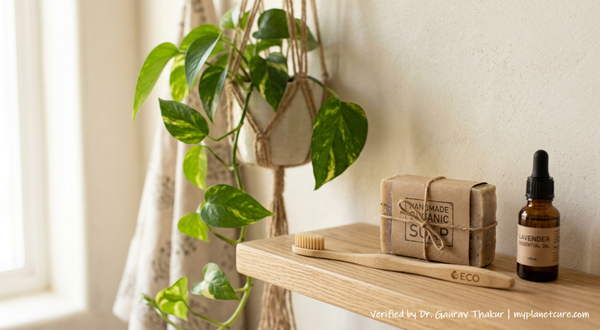
What makes money plant ideal for Indian conditions is its extraordinary tolerance: it survives in low light (though performs better in indirect bright light), tolerates irregular watering, grows in water as well as soil, and thrives in the warm temperatures of Indian interiors. A trailing money plant in a hanging pot near a window in any room in the house is the single best low-maintenance air quality investment available.
Care: Water when the top inch of soil is dry. Any indirect light, including fluorescent indoor lighting. Propagates easily in water — cuttings root in 1–2 weeks. Non-toxic to adults but mildly toxic if ingested by pets or young children — keep out of reach.
2. Peace lily — Spathiphyllum wallisii
The peace lily consistently ranks at the top of air-purifying plant studies. It removes benzene, formaldehyde, trichloroethylene, ammonia and acetone — a broader spectrum of common indoor pollutants than most other plants. In Indian apartments, it is particularly relevant in bedrooms as it removes the ammonia that accumulates from household cleaning products.
The peace lily is also one of the few flowering air-purifying plants, producing elegant white spathes. It prefers low to medium indirect light and actually performs better in lower-light rooms than many other species — making it ideal for Indian apartments with limited window exposure.
Care: Prefers consistently moist (not waterlogged) soil. Will dramatically wilt when underwatered but usually recovers within hours of watering — it is dramatic but resilient. Keep away from direct sun. Mildly toxic to pets.
3. Snake plant — Sansevieria trifasciata
The snake plant is unique among air-purifying plants for performing its gas exchange primarily at night (through a process called Crassulacean Acid Metabolism, or CAM) — converting CO₂ to oxygen while you sleep. This makes it the optimal bedroom plant for air quality during sleeping hours.
It is also among the most drought-tolerant indoor plants available — it tolerates severe neglect, extended periods without water, and almost any light condition. For Indian homes that experience power cuts affecting humidity control, or residents who travel frequently, the snake plant’s near-indestructibility is a practical virtue.
Care: Water very sparingly — once every 2–3 weeks in summer, once monthly in winter. Overwatering (root rot) is the only reliable way to kill it. Tolerates any light including very low light, though grows faster in bright indirect light.
4. Areca palm — Dypsis lutescens
The areca palm is one of the highest-rated air humidifiers among plants — it transpires significant amounts of water vapour into the surrounding air, which is particularly beneficial in Indian homes during dry winter months and in air-conditioned environments where indoor humidity drops to uncomfortably low levels.
It also removes formaldehyde, xylene and toluene — compounds commonly off-gassed by wood-based furniture, flooring and carpets. A large areca palm (1.5–2 metres) in the living room is one of the most comprehensive single-plant air quality investments available.
Care: Bright indirect light — near a window but not in direct afternoon sun. Keep soil moderately moist. Benefits from occasional misting of fronds in dry conditions. Non-toxic to pets, which makes it a safe choice for families with animals or young children.
5. Spider plant — Chlorophytum comosum
Spider plants are among the most effective removers of formaldehyde and xylene, and are notable for their safety — they are non-toxic to children and pets, making them ideal for family homes. They also propagate prolifically (producing “spiderettes” that can be potted as new plants), meaning a single purchased plant can supply an entire apartment within a year.
They adapt well to Indian climate conditions and tolerate indirect light effectively. The striped green-and-white varieties are visually appealing in any interior.
Care: Indirect light preferred. Allow soil to dry partially between watering. Sensitive to fluoridated tap water — use collected rainwater or let tap water stand overnight before use for best results.
6. Aloe vera
Aloe vera earns its place on this list for air purification (it removes formaldehyde and benzene) but also because it is the most multi-functional plant available for an Indian household. Its gel provides first aid for burns and cuts, is used in skin care (see our skin care guide) and hair treatment, and the plant itself is edible and used in Ayurvedic medicine.
It thrives on neglect, loves Indian sun (place on a sunny windowsill or balcony), and propagates freely. Every Indian home should have at least one.
Care: Maximum sun available. Water sparingly — once every 10–14 days. Excellent drainage essential — root rot from overwatering is the primary cause of aloe vera death. Terracotta pots are ideal as they allow moisture to evaporate through the pot walls.
7. Tulsi (Holy basil)
From an Indian cultural and practical standpoint, tulsi deserves inclusion in any list of plants for Indian homes. Ayurveda recognises tulsi as having air-purifying properties through the volatile oils it releases — and while its performance in NASA-style air pollutant removal tests is modest compared to the above species, its production of oxygen and release of aromatic volatile compounds with documented antimicrobial properties makes it practically unique.
Tulsi also provides fresh leaves for daily tea, immunity support (see our tulsi health benefits guide), and occupies a meaningful place in Indian household culture. A tulsi plant on the balcony or in a courtyard window is one of the most comprehensive wellness investments available in a single pot.
Care: Full sun — minimum 6 hours direct sunlight. Well-draining soil. Water when the top soil dries. Pinch off flower buds regularly to extend the leaf-producing life of the plant. Replenish with new seedlings every 1–2 years.
8. Rubber plant — Ficus elastica
The rubber plant has the largest leaf surface area of any common indoor plant — and as noted above, leaf surface area directly correlates with air-purifying capacity. It is particularly effective at removing airborne bacteria and mould spores through its large, waxy, slightly sticky leaf surface.
In Indian homes during monsoon season — when indoor mould spore counts increase significantly with humidity — a rubber plant in the living room or bedroom provides meaningful reduction in the fungal load of indoor air.
Care: Bright indirect light. Allow soil to dry between watering. Wipe leaves monthly with a damp cloth — dusty leaves have significantly reduced gas exchange. Mildly toxic to pets.
How to get the most from indoor plants — practical tips
- Use good quality potting mix, not garden soil. Garden soil compacts in pots, restricts roots, and suffocates the beneficial root zone microorganisms responsible for most air purification. Use a well-draining potting mix with cocopeat, vermicompost and perlite.
- Wipe large leaves regularly. Dust accumulation on leaves clogs stomata and significantly reduces both photosynthesis and air-purifying activity. A monthly wipe with a damp cloth makes a measurable difference.
- Cluster plants together. Groups of plants create a localised humid microclimate around them that supports healthier growth and greater combined air-purifying effect than the same plants distributed individually.
- Do not overwater. The most common cause of indoor plant death in Indian homes is overwatering — particularly in summer when well-intentioned daily watering keeps roots perpetually wet. Most indoor plants prefer to dry slightly between watering.
Frequently asked questions
How many plants do I need to improve air quality in a bedroom?
Research suggests 6–8 medium-to-large plants per 100 square feet for meaningful air quality improvement. For a standard Indian bedroom of 100–150 sq ft, 3–4 medium plants (money plant + snake plant + peace lily + one other) produce measurable air quality improvement.
Are air-purifying plants safe with young children?
Spider plants, areca palm, and tulsi are fully non-toxic. Money plant, peace lily, snake plant, and rubber plant are mildly toxic if ingested — keep these out of reach of toddlers who mouth plants. Aloe vera gel is edible but the latex layer (yellow sap just under the skin) is mildly laxative.
Do plants work as well as air purifiers?
A HEPA air purifier removes particles more rapidly and in higher volume than plants. Plants work more slowly but continuously, address a wider range of VOCs, add humidity, and cost nothing to operate. They are complementary strategies rather than direct substitutes. For rooms with significant pollution sources (heavily furnished rooms, rooms with solvent-based paint, cooking areas), a combination of plants and an air purifier is optimal.
The living air filter that costs almost nothing to maintain
A well-chosen collection of indoor plants costs a few hundred rupees to establish and nothing to run. It improves air quality, adds humidity in dry conditions, reduces indoor allergen load, and creates a living environment measurably different from a room with no plants. The investment, by any measure, is worth making.
For more ways to make your home healthier and more eco-friendly, see our complete eco-friendly home guide.
This article is for informational and educational purposes only. Plant toxicity information is general — consult a poison control centre for specific queries about child or pet ingestion.
For traditional Ayurvedic guidelines and further reading, explore the official resources provided by the Ministry of Ayush or research at the National Institutes of Health (NIH).