Multani Mitti Face Pack Recipes for Every Skin Type
📅 Last reviewed: March 2026
Walk into any Indian pharmacy or kirana store and you will find a small blue packet near the bottom shelf — multani mitti, Fuller’s earth, priced at almost nothing. It has been sitting there for decades, quietly overlooked in favour of branded creams and imported clay masks that cost fifty times as much and often contain a fraction of the active mineral content. If there is a single skin care ingredient that Indian women have consistently underestimated simply because it is inexpensive and familiar, this is it.
Multani mitti — named after the city of Multan in present-day Pakistan, where deposits were historically mined — is a hydrated magnesium aluminium silicate clay with exceptional oil-absorbing, skin-drawing and mineral-delivering properties. Ayurvedic texts mention clay-based skin treatments among the earliest documented cosmetic preparations. The specific formulation changes depending on what the skin needs — and that is where most people stop short. They know multani mitti works. They do not know that using the wrong recipe on the wrong skin type actively worsens the skin they are trying to improve.
Here is how it works, what it does, and the correct recipe for your specific skin type.
What multani mitti actually does to skin — the mineral science
Multani mitti works through three primary mechanisms:
Adsorption: Clay particles carry a negative electrical charge on their surface. Sebum (skin oil), dead cells, bacteria and environmental pollutants carry positive charges. The clay electrostatically attracts and binds these materials to its surface — pulling them out of pores rather than simply sitting on top of skin the way a cream would. This is adsorption (not absorption), and it is the reason clay masks produce visibly cleaner pores rather than just temporarily masking them.
Mineral delivery: Multani mitti is naturally rich in magnesium, calcium, iron, and silica. In contact with skin, these minerals exchange through the skin surface. Magnesium is involved in over 300 enzymatic reactions including those governing skin barrier repair. Silica supports collagen synthesis. Regular multani mitti use provides meaningful mineral supplementation to skin cells — something synthetic masks cannot do.
Mild chemical exfoliation: The slightly alkaline pH of multani mitti (7.5–8.5) softens the intercellular bonds between dead skin cells, making them easier to remove during washing. This produces the smooth, bright skin texture that users notice after a multani mitti application — it is not just oil removal, it is gentle surface cell turnover.
Why the base liquid you mix with matters enormously
This is the detail most recipes overlook. Multani mitti on its own is a mineral clay. What you mix it with determines the additional therapeutic action of the mask — and what is appropriate for oily skin can be genuinely drying and damaging for dry skin, while what works perfectly for sensitive skin may be insufficient for acne-prone skin.
Think of multani mitti as the active mineral base. The liquid and added ingredients are the delivery system and therapeutic modifiers. Getting this right is the difference between skin that looks genuinely better after the mask and skin that feels irritated, tight, or stripped.
The face pack recipes — matched to each skin type
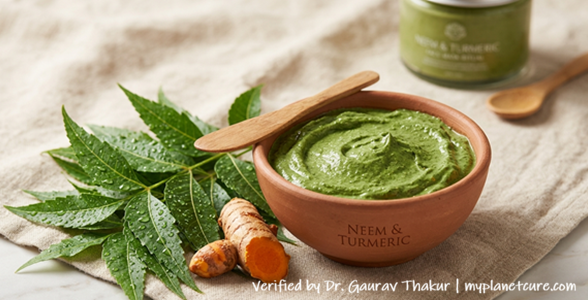
Recipe 1: Oily and acne-prone skin — multani mitti + neem + rose water
This is the most powerful oil-control and antibacterial combination available using natural ingredients. Neem’s antibacterial and antifungal compounds directly address the Cutibacterium acnes bacteria implicated in acne formation. Rose water’s mild astringent properties tighten pores temporarily while its pH (slightly acidic, close to natural skin pH) helps rebalance the skin surface after the alkaline clay has done its work.
Ingredients:
- 2 tablespoons multani mitti powder
- 1 teaspoon neem powder (or 5–6 fresh neem leaves ground to paste)
- Rose water, enough to mix to a smooth paste (approximately 3–4 tablespoons)
- Optional: 1 drop of tea tree oil if severe active acne is present
Method: Mix multani mitti and neem powder in a non-metal bowl (metal reacts with clay and alters its charge). Add rose water gradually, mixing to a smooth paste — not too thin (it will run) and not too thick (it will crack before actives can work). Apply to clean face avoiding the eye area. Leave for 12–15 minutes. Remove with a damp cloth and cool water. Do not let the mask dry completely to the point of skin tightness — remove when just set.
Frequency: 2–3 times per week for oily skin. Once weekly for maintenance once oil production reduces.
Recipe 2: Dry skin — multani mitti + honey + milk
The most common mistake dry-skin people make with multani mitti is using water as the base. Water activates the clay’s full adsorptive power — which, on already-depleted dry skin, strips the limited natural oils present and leaves skin more dry than before.
Milk replaces water in this recipe for a specific reason: milk contains lactic acid (a gentle AHA that exfoliates without stripping) and lipids that counteract the clay’s drying action. Honey is a humectant — it draws moisture from the air and holds it in the skin surface — and has mild antibacterial properties through its hydrogen peroxide content and low water activity. Together, these two modifiers allow oily-skin people to receive multani mitti’s mineral and pore-clearing benefits without the drying effect.
Ingredients:
- 1 tablespoon multani mitti powder (reduced quantity for dry skin)
- 1 tablespoon raw honey (raw, unheated — heated honey loses humectant and antimicrobial properties)
- Whole milk, enough to mix (approximately 2–3 tablespoons)
- Optional: 3–4 drops of almond oil for very dry skin
Method: Mix multani mitti with honey first, then add milk gradually to make a creamy paste. Apply in an even layer and leave for 10 minutes only — dry skin does not benefit from extended clay contact. Remove with warm (not hot) water and follow immediately with a moisturiser while skin is still slightly damp.
Frequency: Once weekly maximum for dry skin.
Recipe 3: Combination skin — multani mitti + cucumber + aloe vera
Combination skin is the most common skin type in India — oily T-zone (forehead, nose, chin), normal to dry cheeks. The challenge is addressing the oily areas without further drying the already-balanced or dry areas. This recipe is calibrated for this balance.
Cucumber juice is approximately 95% water but also contains caffeic acid and Vitamin C — mild anti-inflammatory and brightening compounds that soothe the skin while the clay works. Aloe vera provides mucopolysaccharides (long-chain sugars) that hold moisture at the skin surface and have anti-inflammatory, wound-healing properties documented in multiple clinical studies.
Ingredients:
- 2 tablespoons multani mitti powder
- 2 tablespoons fresh aloe vera gel (scraped from the plant, or cold-processed gel without added colour)
- 2 tablespoons fresh cucumber juice (blend and strain a small cucumber piece)
- Optional: a pinch of turmeric for brightness (use sparingly — more than a small pinch can temporarily stain skin)
Method: Blend aloe vera gel and cucumber juice first, then mix in multani mitti to a smooth consistency. For combination skin, apply slightly thicker to the T-zone and thinner on cheeks. Leave 12–15 minutes, rinse with cool water.
Frequency: Once or twice weekly.
Recipe 4: Sensitive skin — multani mitti + sandalwood + rose water
Sensitive skin requires the mildest possible formulation — enough multani mitti to provide mineral benefit, but with potent anti-inflammatory additions that prevent any reactivity. Sandalwood (chandan) powder is one of the most well-documented anti-inflammatory topical ingredients in Ayurveda — alpha-santalol, its primary compound, inhibits inflammatory cytokines in skin cells and has a cooling, calming action on reactive skin. It also has mild antibacterial properties without being as aggressive as neem.
Ingredients:
- 1 tablespoon multani mitti powder
- 1 tablespoon sandalwood powder (safed chandan)
- Rose water, enough to mix to a smooth paste
- Optional: 1 teaspoon cold-pressed rose hip oil for extra barrier protection
Method: Mix dry powders first, add rose water to a creamy consistency. Apply in a thin layer and leave for no more than 10 minutes. Patch test on the inner wrist before first use on the face, particularly if skin is known to react to new products.
Frequency: Once weekly. Monitor skin response carefully — if any redness persists more than 30 minutes after removal, reduce frequency or discontinue.
Recipe 5: Dull and uneven skin tone — multani mitti + turmeric + lemon juice
This is the brightening recipe — designed for dull, uneven skin tone or post-inflammatory hyperpigmentation (the dark marks left after acne soothes). Turmeric’s curcumin inhibits melanin-producing enzyme tyrosinase — reducing the overproduction of pigment at the source. Lemon juice provides Vitamin C and citric acid, both of which reduce existing pigmentation and brighten the skin surface through mild exfoliation.
Important caution: Both turmeric and citrus increase photosensitivity. Apply this mask in the evening and use broad-spectrum sunscreen the following morning without fail. Do not use outdoors. Do not leave on longer than 10 minutes.
Ingredients:
- 2 tablespoons multani mitti powder
- A very small pinch of turmeric (less than 1/8 teaspoon — more will stain)
- 1 teaspoon fresh lemon juice
- Rose water to balance the consistency
Method: Mix all ingredients to a smooth paste. Apply and leave for exactly 10 minutes — no longer, as citric acid can irritate with extended contact. Rinse thoroughly with cool water. Follow with a gentle toner and moisturiser.
Frequency: Once weekly maximum, always in the evening.
Common mistakes when using multani mitti
- Letting the mask dry until it cracks and pulls at skin. A fully dried clay mask creates tension at the skin surface that can cause micro-tears, particularly around expressive areas (around eyes and mouth). Remove when the mask is set but still slightly tacky — approximately 12–15 minutes for most recipes.
- Using it every day. More is not better with clay masks. Over-use strips the natural acid mantle of the skin, disrupts the microbiome of the skin surface, and causes the skin to overproduce oil in response — the opposite of the intended effect. Once or twice weekly is optimal for oily skin.
- Using tap water with high chlorine content to mix. Chlorinated tap water reacts with clay and disrupts its charge. Rose water, filtered water, or mineral water gives better results.
- Applying to active, broken or inflamed skin. If you have open wounds, severely inflamed acne, sunburn or eczema flares, clay masks will irritate further. Wait until acute inflammation subsides.
- Not moisturising immediately after. Even for oily skin, multani mitti removes surface oils significantly. Failing to apply even a light moisturiser immediately after triggers compensatory sebum production. Oily skin needs moisturiser after a clay mask — a light, non-comedogenic one.
How to choose quality multani mitti
Not all multani mitti products sold in India are the same quality. Look for: grey or off-white colour (pure clay — yellower products often have additives), fine texture without gritty particles, sourced from natural mineral deposits (Rajasthan and the former Punjab region are traditional sources), and minimal ingredient list (multani mitti and nothing else). Brands like Bajaj, Dabur and several artisan organic brands sell food-grade quality multani mitti that is suitable for face use.
Frequently asked questions about multani mitti
Can I use multani mitti every day?
No — even for oily skin. Daily use disrupts the skin’s natural barrier and acid mantle. Twice weekly is the upper limit for oily skin; once weekly for normal, dry or sensitive skin types.
Does multani mitti lighten skin permanently?
Multani mitti reduces hyperpigmentation through its mineral content and mild exfoliation — but this is gradual and consistent use-dependent, not permanent alteration. The brightening effect is real but subtle. For significant hyperpigmentation, pair with the turmeric + lemon recipe and maintain diligent sun protection.
Can multani mitti be used on hair?
Yes — multani mitti is an excellent hair mask for oily scalps. 3 tablespoons of multani mitti mixed with yoghurt and applied to the scalp for 20 minutes absorbs excess scalp oil, reduces dandruff-associated yeast, and cleanses without the harsh sulphates of commercial dry shampoos.
Is multani mitti safe during pregnancy?
Topical use of multani mitti as a face mask is generally considered safe during pregnancy. The lemon and turmeric recipe is better avoided during pregnancy as a precaution. Consult your doctor if uncertain.
The mask that has worked for thousands of years
There is something worth sitting with in the fact that Indian women have been using this simple mineral clay — mixed with whatever garden ingredient addressed their specific skin concern — for millennia, while the beauty industry has spent decades producing expensive variants of the same fundamental chemistry. Multani mitti with the right base liquid is as good as or better than most clay masks available at ten times the price.
For a complete natural skin care routine that incorporates these ingredients, see our guide to building a chemical-free skin care routine for Indian skin. For how to use neem — the most powerful antibacterial addition to these recipes — see our detailed neem skin care guide.
This article is for informational and educational purposes only. Patch test any new skin care recipe before full application. If you have a skin condition, consult a dermatologist before using new topical preparations.
For traditional Ayurvedic guidelines and further reading, explore the official resources provided by the Ministry of Ayush or research at the National Institutes of Health (NIH).